A crash takes less than a second, yet the effects can linger for months. I have met Texans who walked away from low-speed fender benders feeling “fine,” only to wake up the next morning with searing neck pain, pounding headaches, and hands that tingled when they reached for the coffee pot. Others came in after high-speed collisions, past the adrenaline and paperwork, frustrated that their X-rays “looked normal” even though they felt far from it. This is the messy middle between impact and recovery, and it is exactly where a skilled accident and injury chiropractor earns their keep.
Dallas is a driver’s city. The commute on I-35E, the loops of 635, the stop-and-go near downtown, all raise the odds of being jostled or jolted by another vehicle. When that happens, what you do in the first days makes a big difference in how well you heal. If you are looking for a Chiropractor Dallas TX residents trust after a wreck, you are not searching for a generic back crack. You want a clinician who understands collision mechanics, soft-tissue timelines, documentation for claims, and how to sequence care so you do not load injured tissues before they are ready.
Why whiplash is more than a sore neck
Whiplash is not just the jerky movement your head makes on impact, it is a cascade of micro-injuries that involve ligaments, facet joints, discs, nerves, and muscle spindles that regulate tone. In a rear-end collision at 8 to 12 mph, the cervical spine can experience a four-phase movement pattern over roughly 300 milliseconds: initial torso acceleration, head lag, neck extension with posterior shear, and a rebound into flexion. Even “minor” collisions produce forces beyond what everyday activities impose. This is why people often report delayed pain. Inflammation blooms overnight, protective muscle guarding ramps up, and the brain’s threat response makes everything feel worse on day two or three.
I have seen whiplash present in surprising ways. One patient could not read screens for more than ten minutes because of dizziness and eye strain. Another had nagging jaw pain and clicking that started after the wreck, not during it. A third had elbow pain that turned out to be referred from a nerve root irritated at C6. None of them had fractures. All of them had real, treatable problems in the soft tissues and joints.
The first 72 hours: what a Dallas chiropractor looks for
Accident and injury chiropractors in Dallas follow a careful triage path. First priority is ruling out red flags. Any loss of consciousness, progressive weakness, bowel or bladder changes, or suspicion of fracture sends the patient to the ER. When red flags are absent but pain is significant, the exam focuses on tissue-specific findings. Range-of-motion deficits, segmental joint restriction, palpable myospasm, altered reflexes, and dermatomal sensory changes all guide care. Objective measures matter for clinical reasoning and for documentation that supports an insurance claim.
Imaging is not a reflex. Plain films are used when fracture risk is nontrivial or when there is concern for instability. Advanced imaging, like MRI, is considered when neurological deficits persist or when conservative care does not yield expected gains within a reasonable window, often two to six weeks. A thorough accident and injury chiropractor will explain why an image is or is not helpful, and will not order studies just to pad a file.
Why chiropractic care pairs well with soft-tissue injuries
Dallas chiropractors who handle collision cases understand biomechanics. Joints that stop moving well do not feed the nervous system the input it expects, and the body responds with muscle guarding and compensations. Adjustments, when appropriate, restore motion at restricted segments. That does not mean high-force thrusts every visit. Gentle mobilization, instrument-assisted adjustments, or drop-piece techniques can be used when tissues are irritable.
Manual therapy to the soft tissues matters just as much. After a crash, fascia and muscle often develop localized trigger points that perpetuate pain and limited motion. Therapies like myofascial release, active release techniques, and instrument-assisted soft tissue mobilization help break the loop. When combined with joint work, patients move better between visits, which opens the door to corrective exercise.
Rehab is the anchor. Early on, this may be isometrics and controlled range movements. Later, it evolves into deep cervical flexor training, scapular stabilization, thoracic extension work, hip hinge practice, and gait retraining if the lower body was affected. A typical plan uses a phased approach: calm it down, build it back up, then bulletproof it against recurrence.
A week-by-week arc of realistic recovery
People often ask for a simple timeline. Bodies do not read calendars, but patterns emerge with consistent care.
Week 1: Expect to protect irritable tissues. You may start with two to three short visits focused on pain control, gentle mobilization, and strategies for sleep. It is common to feel stiff in the morning and more sore at day’s end. Good signs include less “catching” pain when turning the head and improved tolerance for desk work.
Weeks 2 to 3: Range improves. Pain starts to move from sharp to achy. Patients typically resume more normal activities with pacing and planned breaks. Stabilization exercises begin, focusing on the deep neck flexors and shoulder blade control. Headaches often reduce in frequency.
Weeks 4 to 6: Strength and endurance become the priority. Drive times feel easier. Many people return to light workouts, with cues to avoid end-range loading or heavy axial compression. Exercises incorporate tempo and control, not just reps. If dizziness or visual strain were present, this is where vestibular or oculomotor therapy might be layered in.
Weeks 8 to 12: Residual issues get addressed. For some, that is a stubborn trigger point near the first rib. For others, it is fear of quick movements or the last 10 percent of rotation needed to shoulder-check on the highway. The goal is not just symptom reduction, it is resilient function.
Severe cases, preexisting degeneration, or multi-region injuries can double these timelines. The right Dallas chiropractors adjust plans based on how your body responds, not a preset package.
Real-world examples from Dallas roads
A 29-year-old software engineer was rear-ended on 75 near Walnut Hill. He had neck stiffness, headaches, and could not sit longer than twenty minutes. No red flags. We used gentle cervical mobilization and thoracic manipulation, soft-tissue work to the upper trapezius and suboccipitals, and a simple three-move home plan: chin tucks with a towel, low row with a band, and pectoral doorway stretch. By week three he sat through a two-hour sprint planning session without flaring. He finished care in eight weeks with a maintenance strategy tied to his desk ergonomics and lifting routine.
A 47-year-old nurse was T-boned in Oak Cliff. She had low back pain with left leg referral, numbness into the calf, and difficulty sleeping. Exam suggested L5/S1 disc irritation without severe neurological deficit. We started with directional preference work, McGill-style bracing drills, and sacroiliac joint mobilization. She avoided flexion under load and took short walking breaks every hour. MRI was not immediately necessary. By week five her leg symptoms had centralized to the back, which fits with the expected progression. She returned to 12-hour shifts with a pacing schedule and a hip-hinge emphasis for patient transfers.
These are not outliers, they are patterns you can expect when care is matched to the problem and executed with consistency.
How chiropractic fits with the broader care team
Accident recovery is rarely a solo act. A best-case Chiropractor Dallas TX patients recommend will communicate with your primary care physician, physical therapist, or pain specialist when needed. Some cases benefit from co-management with massage therapy or acupuncture. Others require referral for epidural injections, especially when radicular pain stalls progress. Good clinicians welcome collaboration, because the goal is not to “own the patient,” it is to own the outcome.
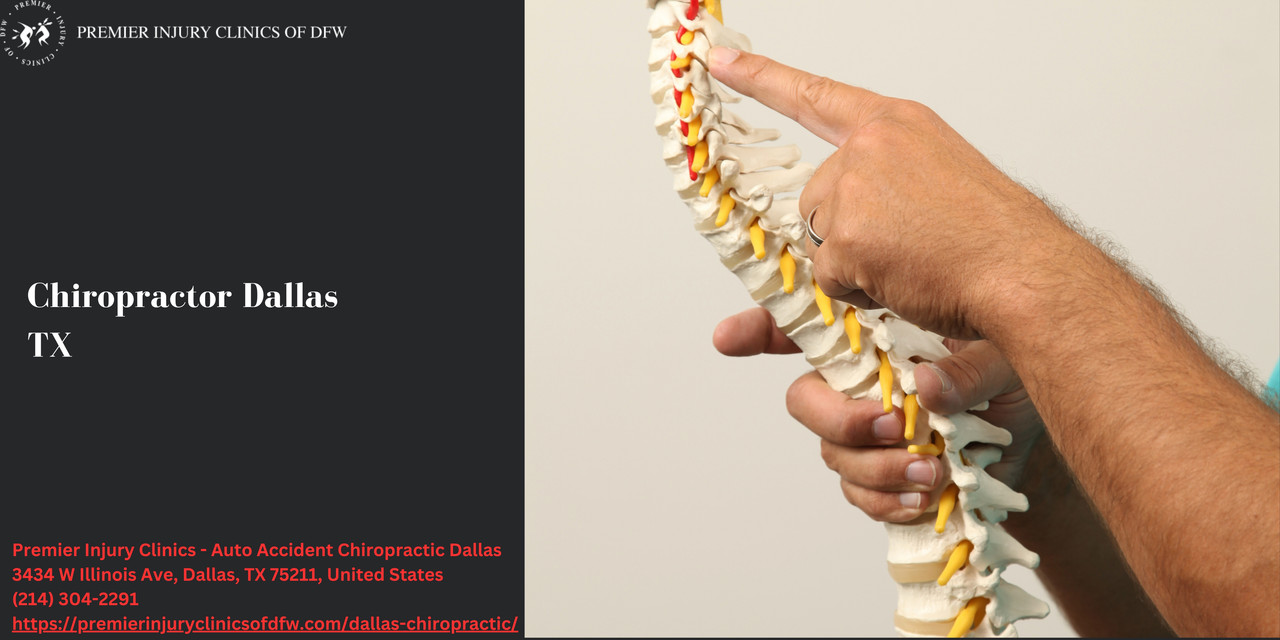
When symptoms include concussion or vestibular issues, your accident and injury chiropractor may integrate balance training, gaze stabilization, and graded exertion protocols. Sleep, nutrition, and stress modulation also matter. Anti-inflammatory habits help, whether that is a simple 20-minute walk after dinner, prioritizing protein to support tissue repair, or a magnesium supplement if appropriate for sleep support.
What to expect during an injury-focused chiropractic visit
A first appointment runs longer than a routine wellness check. Expect a detailed history that includes crash details, seat position, headrest height, and whether you braced. These clues inform which tissues likely absorbed force. The physical exam will test joints, muscles, and nerve function. You should leave with a working diagnosis, a proposed plan, and a rationale for each part of it.
Treatment sessions vary with the phase of healing. Early appointments might start with heat or gentle electrical stimulation to calm a flare, followed by mobilization and specific adjustments. Soft-tissue work targets bands you can feel, not broad, unfocused rubbing. You will likely be taught one or two home exercises to perform daily, with a real expectation that you will do them. The best chiropractor Dallas TX patients praise does not overload you with ten exercises you will never remember. Progress is built on simple, repeatable actions.
Dallas-specific realities: traffic, timing, and logistics
City life affects care. If you drive long stretches on LBJ or the Tollway, you need a plan for commuting while you heal. Adjusting your headrest to sit just below the crown of your head, slightly tilting the seat back to open the hip angle, and using lumbar support can take pressure off the spine. For lunch-hour visits, choose a clinic with parking that does not require a half-mile walk. If you rely on DART, ask the office about schedules and whether early or late appointments are available so you can avoid peak crowds.
The Dallas heat is not just an annoyance, it affects hydration and muscle tension. People who are slightly dehydrated often cramp more and feel tighter after a day in the sun. Aim for steady intake, not last-minute chugging. If you work outdoors or in a warehouse, talk to your chiropractor about heat-exposure strategies and how to pace lifting during the first month.
Documentation that stands up to scrutiny
If an insurance claim is in play, your records need to be clear, consistent, and defensible. A seasoned accident and injury chiropractor documents objective measures at baseline and at intervals: range of motion with numbers, neurologic findings, functional scores, and response to specific interventions. They note missed appointments, flare-ups, and work restrictions with dates, not vague phrases. This helps both you and your attorney, if you have one, tell a straightforward story: here is what was injured, here is what we did, here is how it changed over time.
Beware of clinics that lock you into long, prepaid packages without explaining the clinical reasoning. A plan should outline frequency and duration, but it must be revisited as you progress. Recovery is dynamic. Good care reflects that.
When adjustments are not the right move
Not every crash patient should be adjusted on day one. Acute sprains with significant swelling, suspected fractures, or signs of cervical instability call for caution. Gentle mobilization, isometrics, and pain-modulating techniques may precede any thrust manipulation. Patients with osteoporosis, inflammatory arthropathy, or connective tissue disorders might require modified force or entirely different strategies. Prudence is not hesitation, it is professionalism.
I have declined to adjust patients who arrived expecting a dramatic neck “pop,” because their presentation suggested a different approach. Two weeks later, after the acute phase settled, we introduced low-amplitude techniques and they responded well. The point is not to deliver a technique, it is to deliver an outcome.
Building resilience so you do not end up back in the same chair
Healing is not crossing a finish line, it is leveling up your baseline. The final phase of care should build capacity where you were weak before the crash. For many desk-bound Dallas professionals, that means thoracic extension and scapular strength. For delivery drivers, it is hip hinge mechanics, foot strength, and a plan for micro-breaks amid a heavy route. For nurses and techs, it is load-sharing strategies during transfers.
Simple daily habits add up. A two-minute mobility routine at wake-up and before bed can maintain the gains you made in care. People who integrate these habits tend to bounce back faster from future strains. Those who do not often drift back into the compensation patterns that made them vulnerable in the first place.
Choosing the right partner in your recovery
Dallas chiropractors are not all the same. Credentials and bedside manner personal injury chiropractic care both matter. Look for clinicians who have additional training in whiplash or spinal rehabilitation, who can explain your plan in plain English, and who treat you like a person, not a billing code. If you are searching for the best chiropractor Dallas TX for accident care, the most important quality is not a superlative in a listing, it is alignment with your goals and the complexity of your case.
Here is a short, practical checklist to use during your first call or visit:
- Do they take a detailed crash history and screen for red flags? Can they explain why each part of the plan is included and how progress will be measured? Do they integrate rehab, not just adjustments, and tailor it to your life? Will they coordinate with other providers if needed and provide clear documentation? Do they reassess at reasonable intervals and adjust the plan based on your response?
If the answers are vague, keep interviewing clinics. A good accident and injury chiropractor will welcome informed questions.
How pain, fear, and the nervous system intertwine after a crash
Pain is not only about tissues, it is also about context. After a collision, your brain associates certain movements and environments with danger. You might tense up every time you merge onto the highway. This protective response is natural but can become a barrier. Part of care is graded exposure: slowly reintroducing movements and situations in a controlled way so your nervous system relearns that they are safe. It might be as simple as practicing shoulder-checks in the clinic mirror, then in a parked car, then on a quiet street before rush hour. These small wins matter as much as range of motion degrees.
Breathing patterns also shift under stress. Many patients adopt shallow, upper-chest breathing that keeps the neck muscles “on” all day. A few minutes of diaphragmatic breathing, practiced consistently, can downshift the system and reduce tone in the very muscles that hurt.
What if you delayed care?
Not everyone gets checked right away. Life is messy. You might not feel pain until a week later, or you may have hoped it would fade. Starting care late is not a deal-breaker. The plan just changes. We spend more time unraveling compensations that settled in and may need a longer runway to restore endurance. I have seen 6-week-old cases do well with focused work. If you are months out, progress is still possible, though patience becomes even more important. The body remodels collagen along lines of stress for months, sometimes a year or more. Smart loading influences that remodeling.
Cost, frequency, and what “enough care” looks like
People want to know how many visits they will need. The honest answer is it depends on injury severity, your adherence to home care, and how physically demanding your life is. Simple cases may resolve in 6 to 10 visits over four to six weeks. Moderate whiplash with headaches and mid-back involvement might take 12 to 20 visits over two to three months. Complex cases or multi-region injuries can run longer, sometimes with a taper to monthly check-ins as you resume full activity.
Quality over quantity should guide decisions. If you are not seeing tangible improvements in function by week three, the plan needs a tweak: different techniques, additional rehab emphasis, or a referral for co-management. The best practices are transparent about this and welcome the conversation.
Final thoughts from the treatment room
The best outcomes happen when clinician and patient work as a team. You bring your goals and your daily effort. Your chiropractor brings clinical judgment, hands-on skill, and a plan that evolves as you heal. If you are in North Texas and a recent crash has you hurting, an experienced accident and injury chiropractor can help you move from whiplash to wellness with a blend of careful assessment, targeted manual therapy, and progressive rehabilitation. The road back is not a straight line, but with the right partner, it is absolutely navigable.
If you are searching terms like Dallas chiropractors, Accident and injury chiropractor, or Best chiropractor dallas tx, use your search as the start of a conversation. Ask specific questions, expect clear answers, and commit to a plan that respects both the art and the science of recovery. Your neck, your back, and your peace of mind are worth it.
Contact Us
Premier Injury Clinics - Auto Accident Chiropractic Dallas
3434 W Illinois Ave, Dallas, TX 75211, United States